
Get Closer, Give Back
Experiences & Conservation
From free daily keeper talks to behind-the-scenes Keeper for a Day experiences — and the breeding and education work every visit helps fund.
Included With Admission
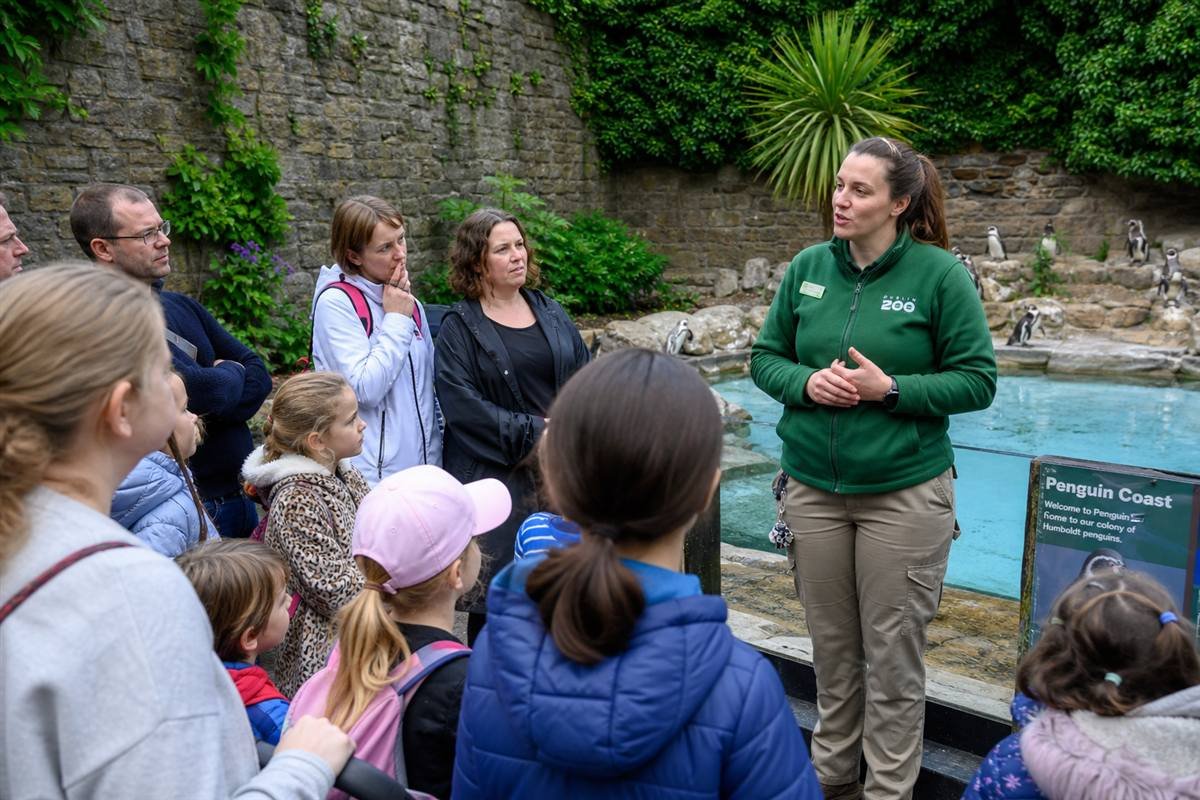
Daily Keeper Talks & Feeds
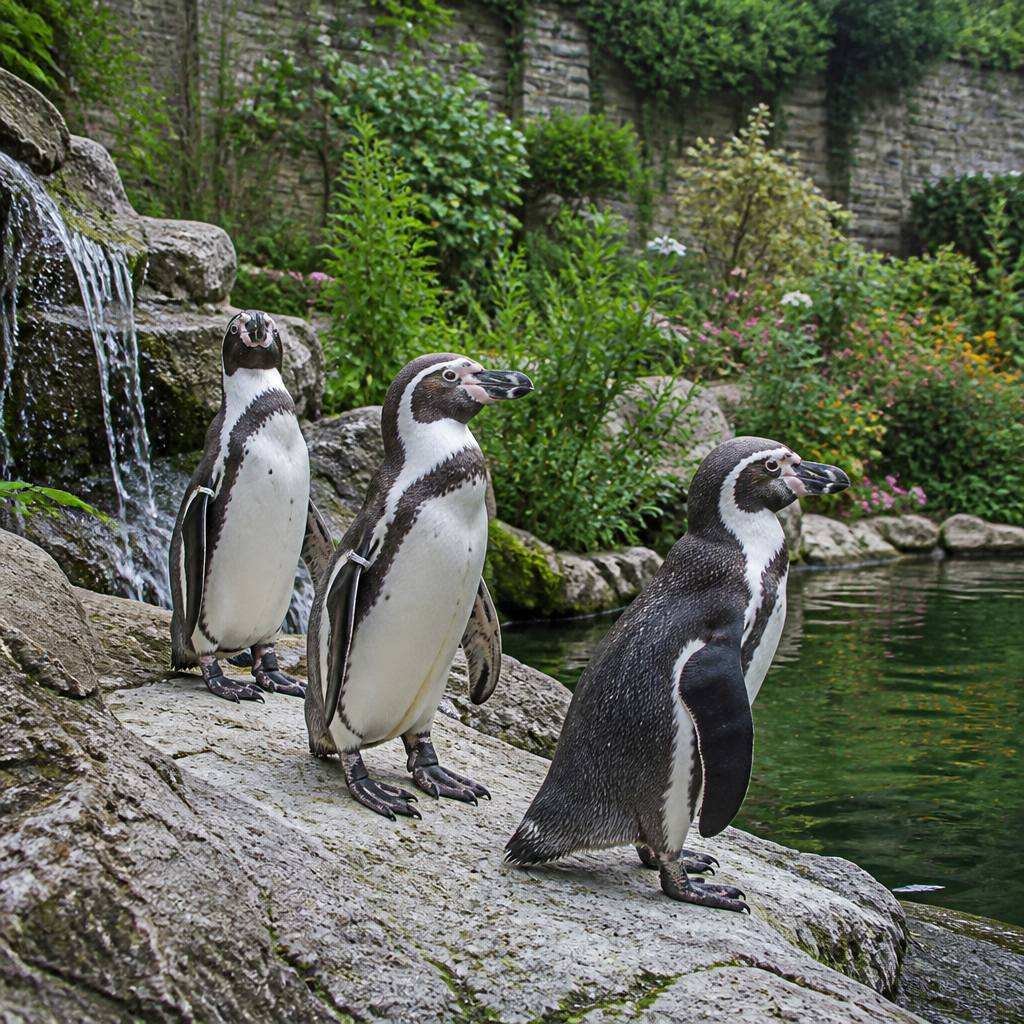
Can you feed the penguins? Watch keepers hand-feed the resident Humboldt penguins during the daily talk at 11am and 3pm in the Walled Garden. A lemur feeding talk runs daily at 12 noon. All daily talks are free and included with your admission ticket.
Bookable Experience
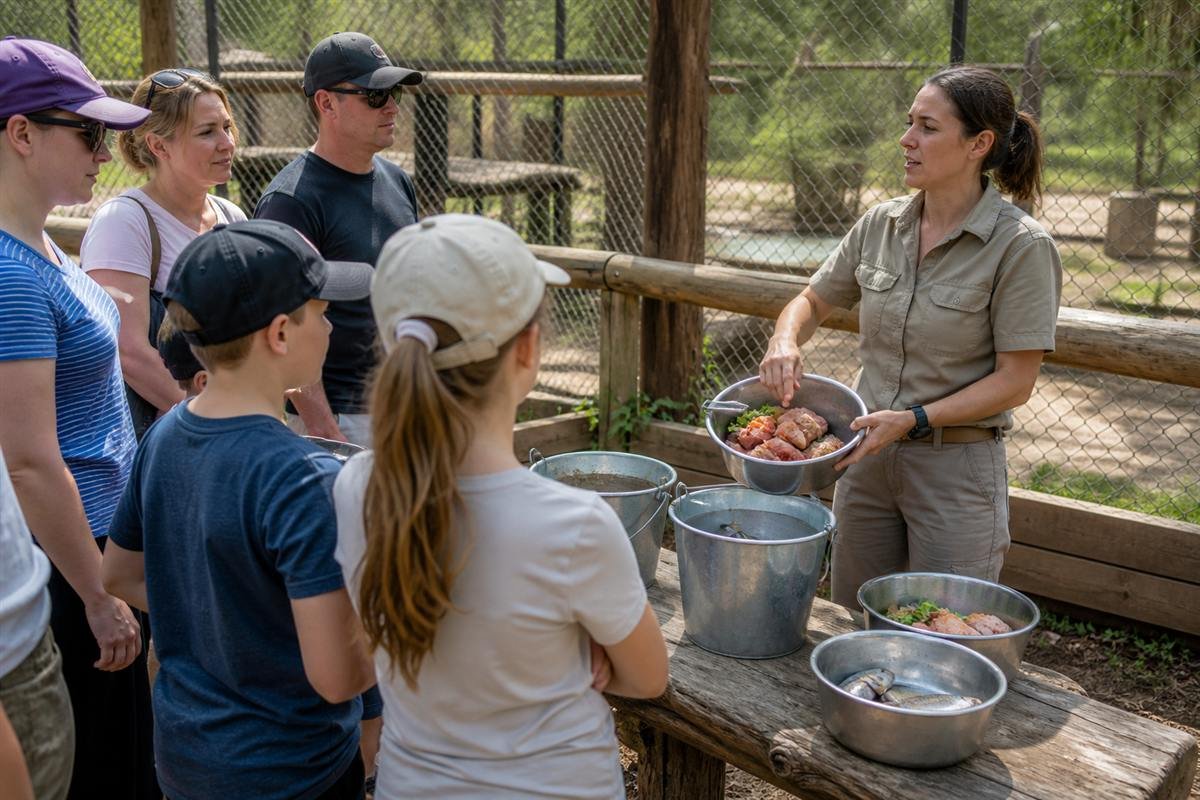
Keeper for a Day
What does Keeper for a Day involve? A behind-the-scenes experience shadowing the animal team — food preparation, enclosure enrichment, and close-up time with keepers explaining the day-to-day realities of animal care.
- Small group sizes, booked in advance
- Suitable for adults and older teens
- Includes standard Park admission for the day
- Availability varies by season — book ahead
Bookable Experience
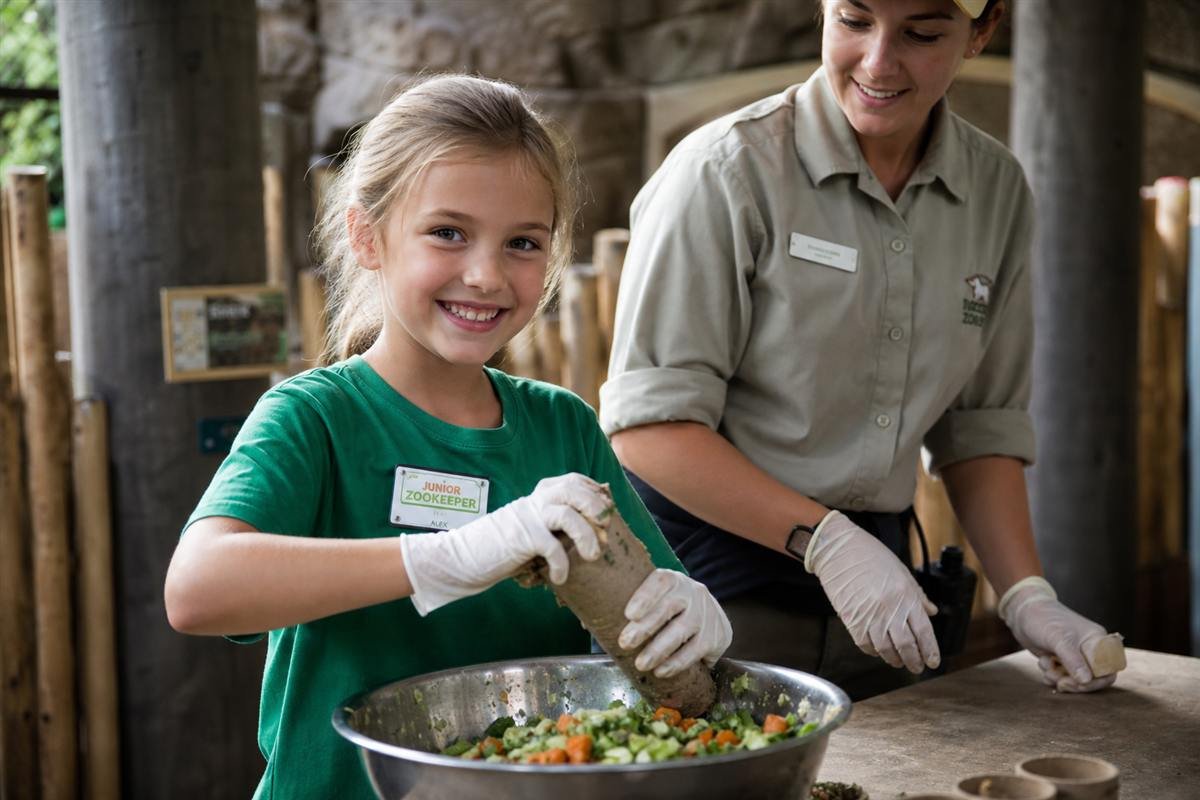
Junior Keeper Experience
Is there a keeper experience for kids? Yes — the Junior Keeper Experience is a hands-on introduction to animal care, designed for younger visitors and supervised throughout by Park staff.
- Designed for younger visitors, supervised by keeper staff
- Hands-on food preparation and enrichment activities
- A memorable add-on for birthdays or school holidays
- Book in advance — capacity is limited each day
Seasonal — April to October
Bella the Train & More
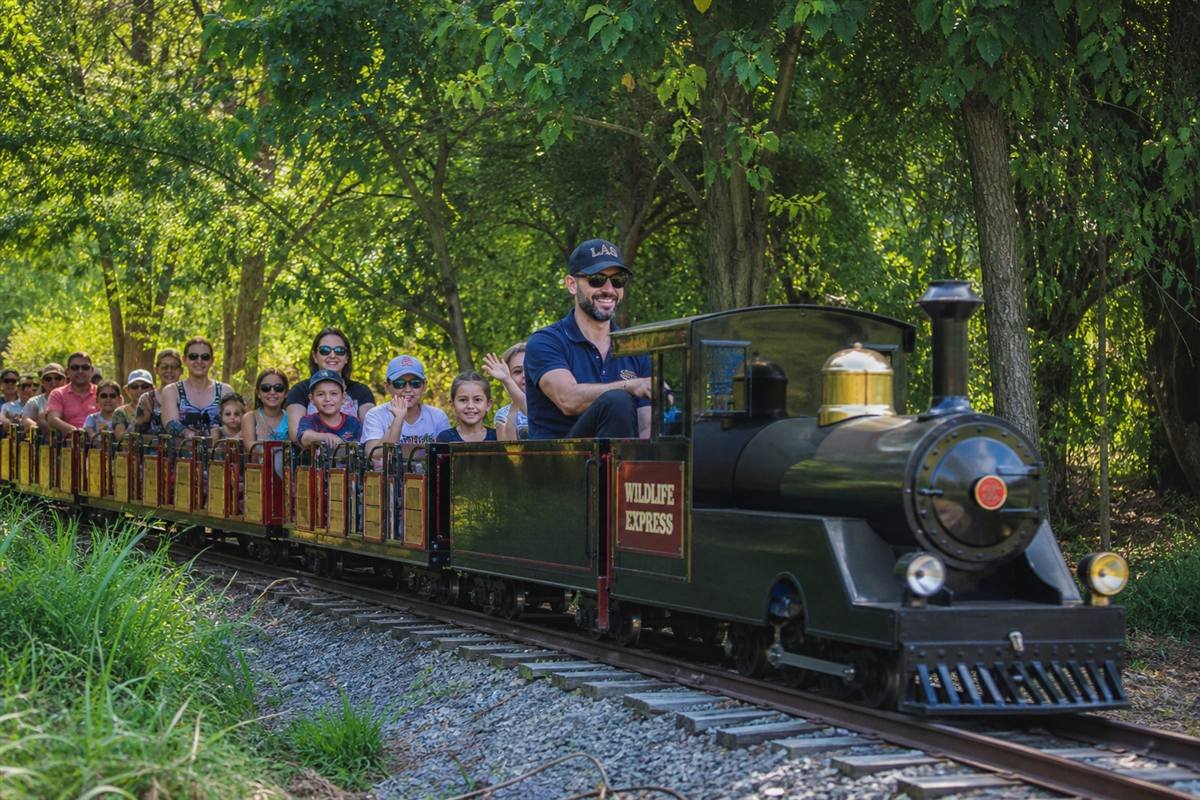
Is the train free? No — Bella the narrow-gauge train has a small charge (around £2 adult, £1 child, under-3s free) and runs a scenic loop around part of the Park from April to October.
Bella the Train
A relaxed way to see part of the Park without walking — popular with younger children and grandparents. Read a family day-out guide →
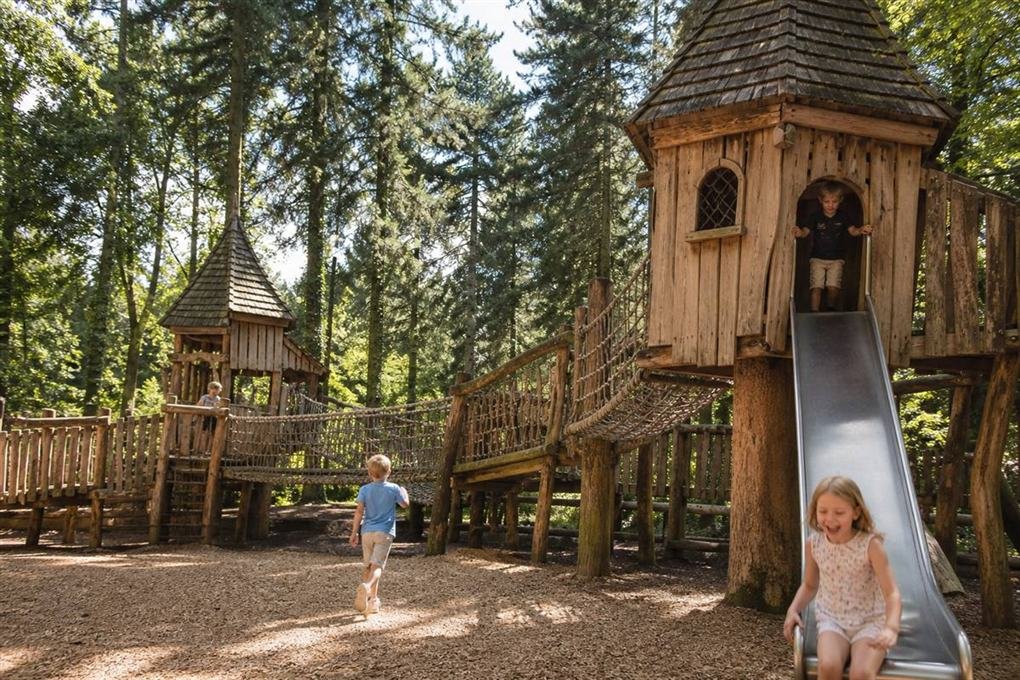
Adventure Playground
Treehouses, rope bridges and slides right next to the Children’s Farmyard.
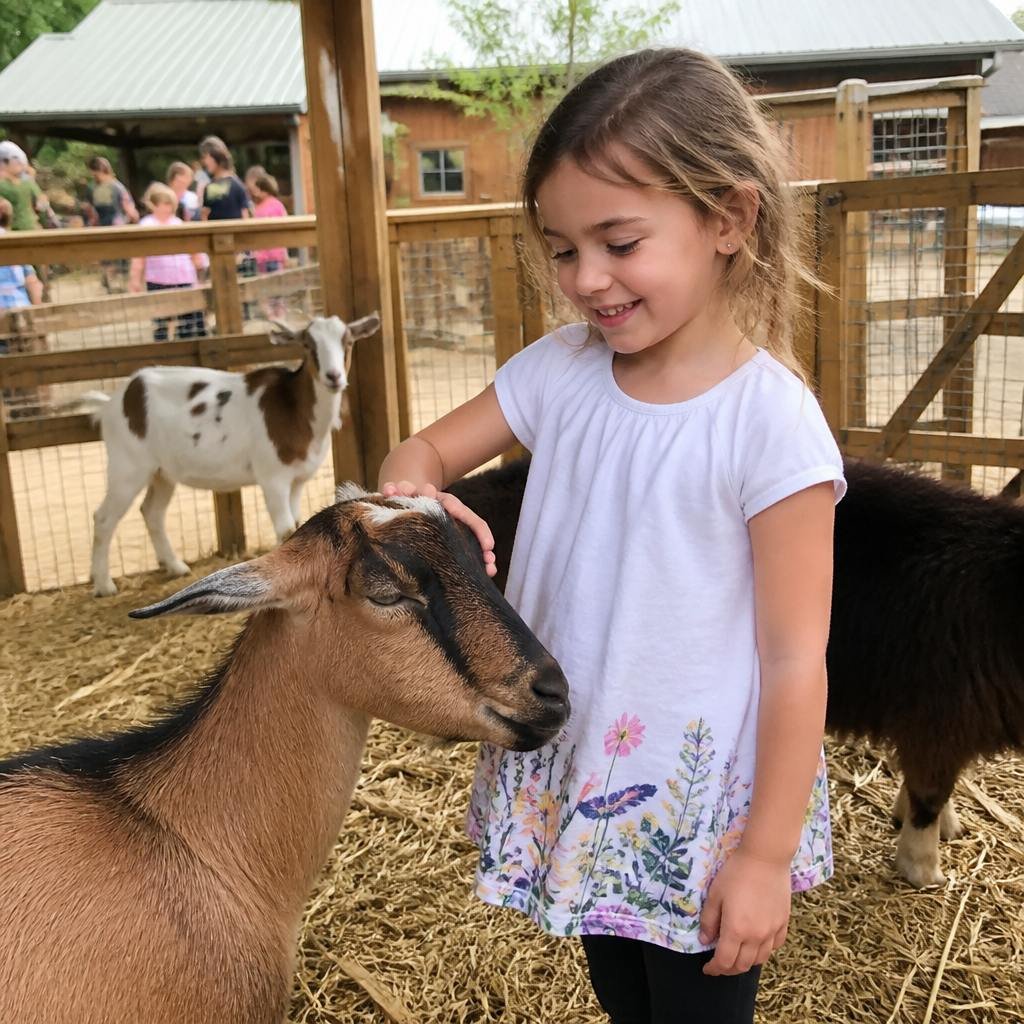
Children’s Farmyard
A hands-on goat-petting area — a favourite first stop for younger visitors.
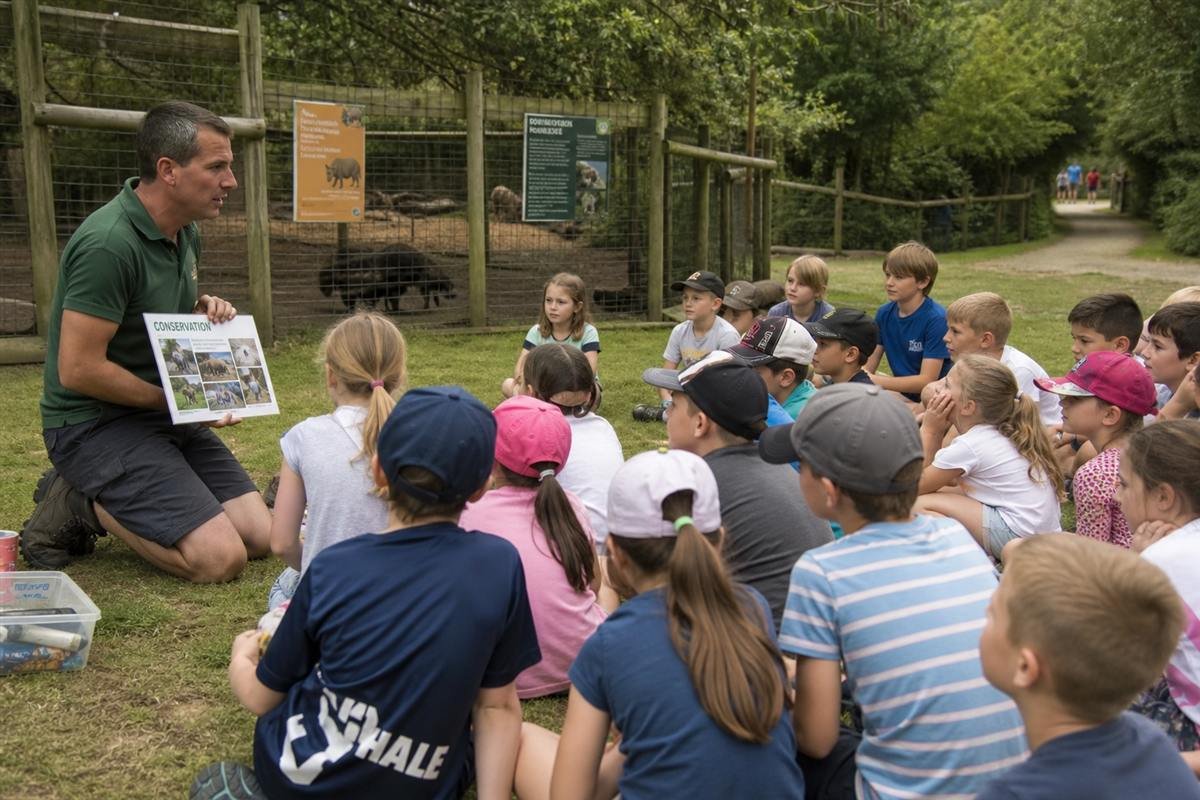
For Schools & Groups
Group & School Visits, and Education
Does the Park run school trips? Yes — structured, curriculum-linked education programmes run from Early Years through Further and Higher Education, using the live animal collection to teach conservation, biology and environmental science in a way a classroom alone can’t. Discounted group rates are also available for coach parties and community groups.
- Curriculum-linked education sessions with Park educators
- Daily talks open to every visitor, not just booked groups
- Dedicated coach and minibus parking
- Group discounts for parties of 15+
- Risk assessments and pre-visit information available on request
Beyond the 160 Acres
Our Conservation Commitment
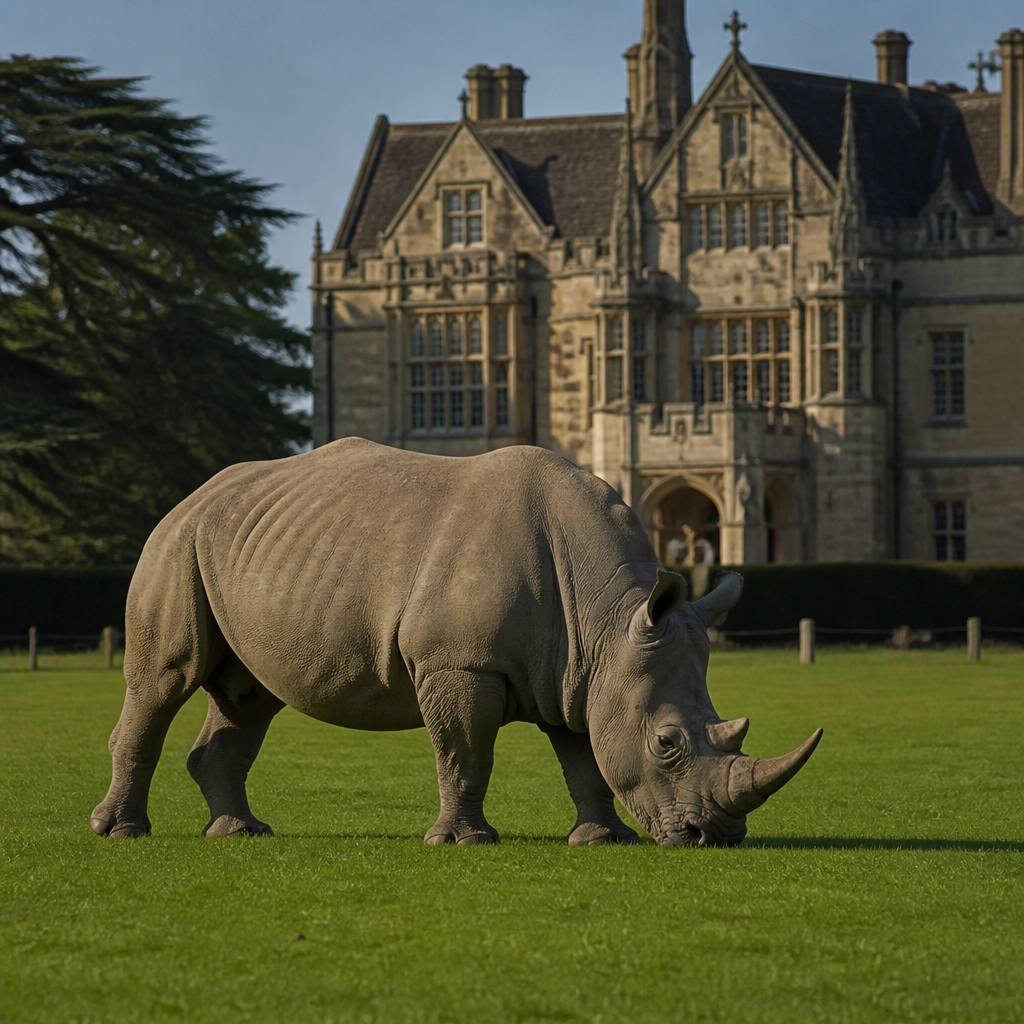
Does Cotswold Wildlife Park do conservation work? Yes — the Park participates in European breeding programmes for threatened species including the Southern white rhino and Brazilian tapir, runs the education programmes above for schools, and every keeper talk covers each species’ IUCN conservation status.
Breeding Programmes
European Breeding Programmes
Cotswold Wildlife Park participates in coordinated European breeding programmes for several threatened species — most visibly the Southern white rhino and the Brazilian tapir. These programmes match animals across accredited collections to maintain genetically healthy populations as a safeguard against decline in the wild. Read why we take part →
- Southern white rhino — European breeding programme participant
- Brazilian tapir — international breeding cooperation
- Daily keeper talks explain each species’ current IUCN conservation status
- Wider involvement in international wildlife conservation causes
How You Can Help
Every Visit Funds This Work
Visit the Park
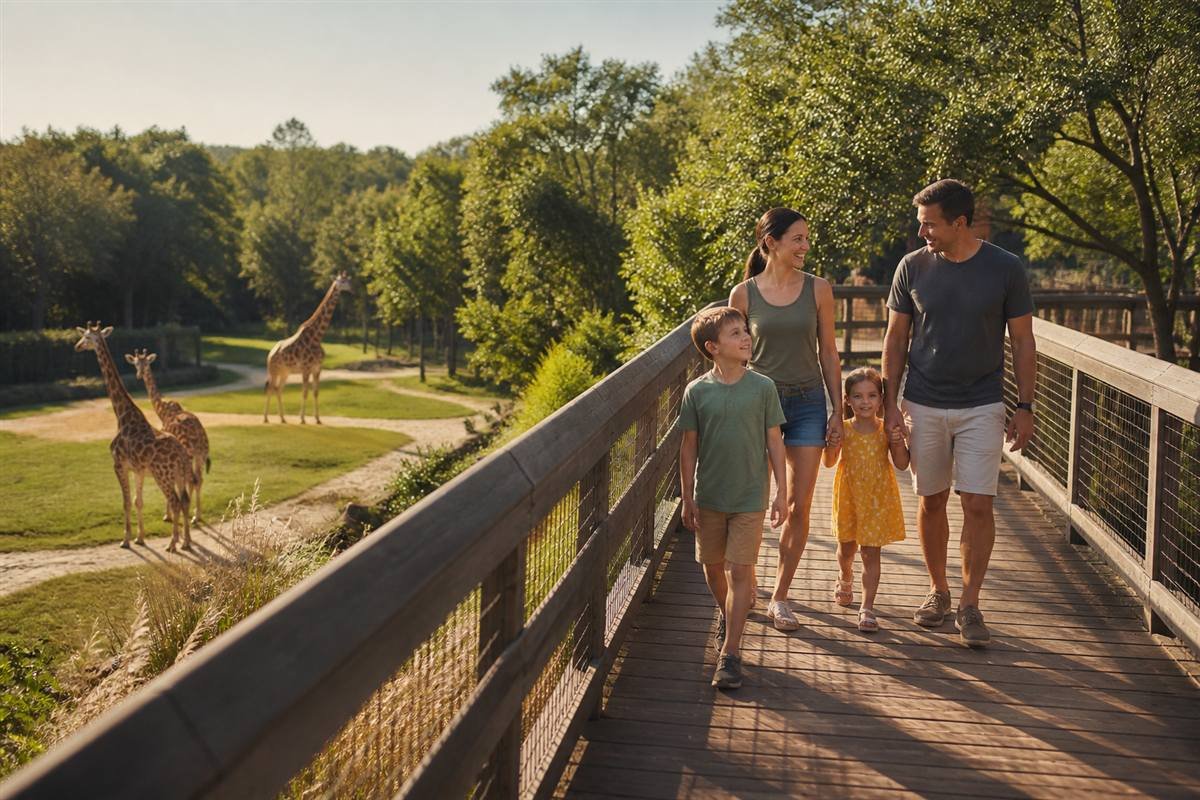
Admission income directly funds animal care, breeding programme participation, and education work.
Adopt an Animal
Symbolically adopt a Park resident — a popular gift that supports animal care year-round. See Animal Adoptions →
Follow Our Work
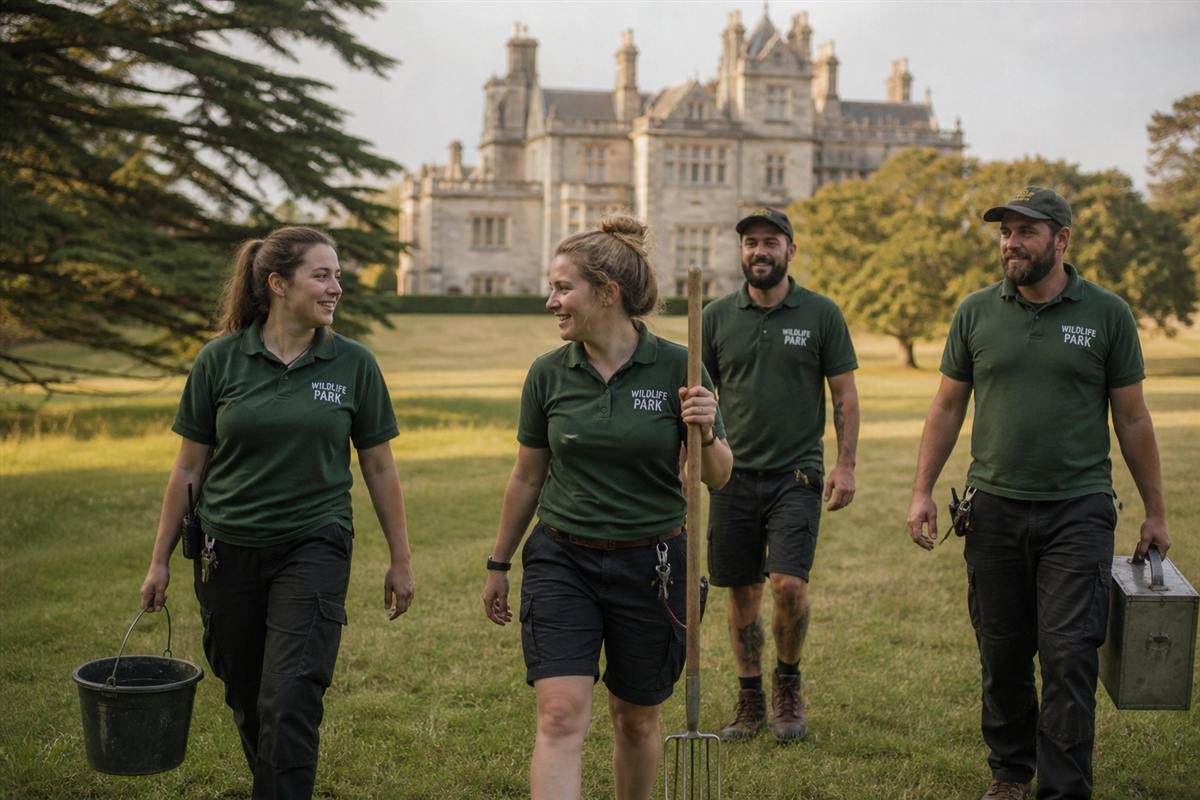
New arrivals, keeper insights and conservation updates are shared regularly. Read the Blog →

Ready for a Closer Look?
Daily talks are free with admission — bookable experiences fill up fast in school holidays.